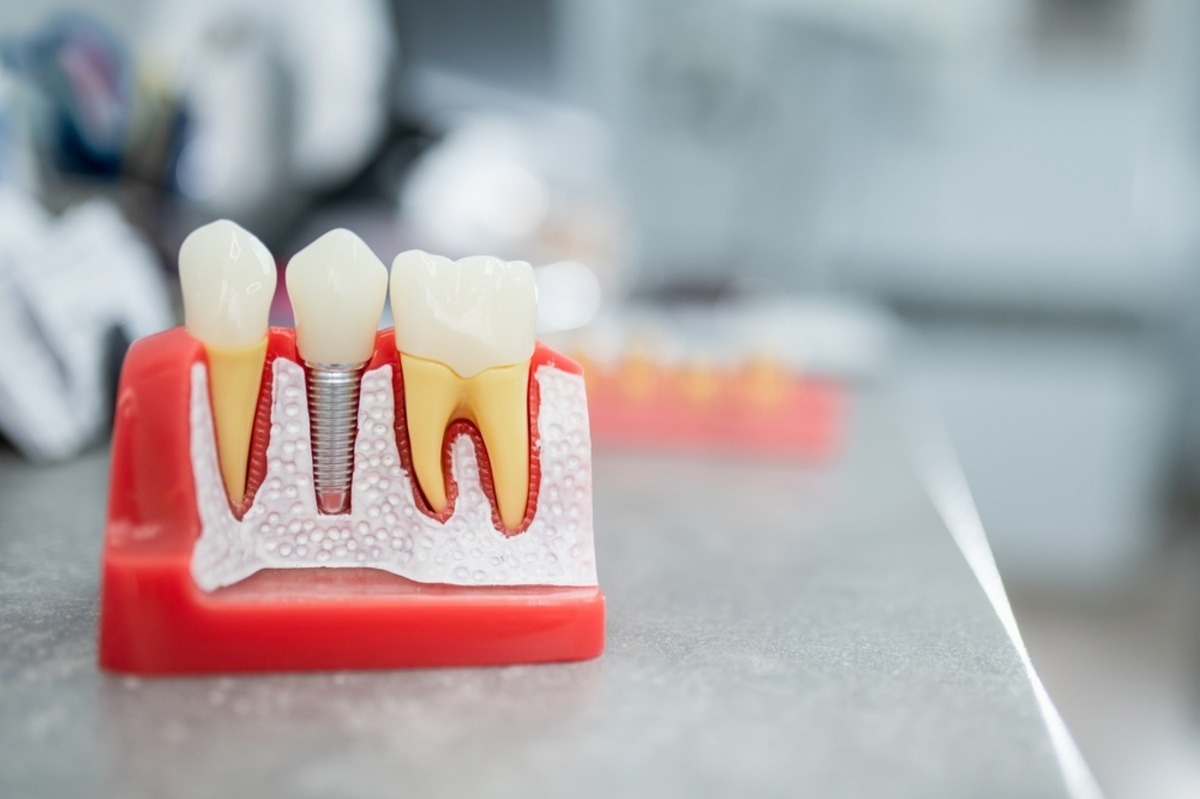
Bone loss can raise questions about replacing missing teeth. You may wonder whether your jaw has enough bone for an implant. A dentist in Cambie, Vancouver, can examine your mouth and discuss your options. A cone beam computed tomography (CBCT) scan creates 3D images of your jaw, showing bone height, width, and shape. This helps with planning and shows whether a bone graft may be needed.
How Does Bone Loss Affect Dental Implant Placement?
An implant needs healthy jawbone for support. After placement, the surrounding bone bonds with its surface.
When a tooth is lost, the bone beneath it receives less stimulation from chewing and can shrink in height and width. This is called bone resorption.
Bone loss can develop for several reasons:
- Missing teeth: The jawbone in an empty tooth socket can gradually shrink.
- Gum disease: Advanced gum disease can damage the bone supporting your teeth.
- Long-term denture use: Changes in jaw shape can make dentures loose or uncomfortable.
- Dental infections: An untreated infection can affect the bone around a tooth.
Having less bone does not necessarily rule out implants. Your dentist will check whether enough remains to support one.
What Does a CBCT Scan Show?
A regular X-ray gives a two-dimensional image. A CBCT scan shows your teeth, jawbone, and nearby structures in 3D. During CBCT 3D scan implant planning, your dentist can assess:
- Available bone: Its height and width at the proposed implant site.
- Jaw structure: Whether the area is narrow or uneven.
- Nearby structures: The position of nerves in the lower jaw and the sinuses above the upper back teeth.
- Further treatment: Whether bone grafting may be needed before placement.
A CBCT scan for dental implant candidacy in Cambie and Broadway, Vancouver helps assess whether enough bone is available. Your examination, dental history, and general health also matter.
Can You Get Implants If You Have Bone Loss?
Sometimes. The options depend on how much bone is missing and where.
Bone Grafting
A bone graft before implant placement may be recommended when the jawbone is too narrow or short to support an implant.
Grafting material is placed where more bone is needed. Your body gradually remodels it as new bone develops. Healing may take several months.
Sinus Lift
If there is not enough bone beneath the sinus for an upper back implant, a sinus lift may be considered. It raises the sinus membrane to make room for grafting material.
Other Implant Approaches
Depending on how much bone remains, your dentist may suggest a different implant size or position. If your jaw already has enough healthy bone, you may not need a graft.
Are Implants for Seniors With Bone Loss Possible?
Being older does not necessarily mean you have to rule out dental implants. Some seniors with bone loss can still receive them, depending on their jawbone condition and overall health.
If you’re considering implants for seniors with bone loss, your dentist will review your health history and check for anything that could affect healing. Your dentist may ask about:
- Diabetes and how well it is controlled.
- Gum disease or active oral infections.
- Medications that may affect healing.
- Smoking or tobacco use.
- Your ability to maintain daily oral hygiene.
Some conditions and medications can affect recovery without ruling out treatment. Your dentist may consult your physician.
What Other Factors Affect Implant Candidacy?
A scan alone cannot determine whether you’re suitable for dental implants. Implant candidacy factors include gum and bone health, general health, and oral hygiene. Smoking can slow healing and raise the risk of complications.
If you are looking for a dentist near you, an examination can help clarify which options may suit your situation.
What Happens After the Scan?
After reviewing the images, your dentist can:
- Check the amount and condition of the remaining bone.
- Explain whether grafting is needed.
- Plan the implant position and treatment sequence.
- Discuss healing time and preparation.
CBCT scans use radiation, so they should be recommended only when necessary. Exposure should be limited to what is needed.
Discuss Your Implant Options
Bone loss does not always prevent implant treatment. Contact Cambie Broadway Dental to discuss your options and arrange a consultation.
Frequently Asked Questions
Can You Get Implants With Severe Bone Loss?
Possibly. A bone graft may provide support, depending on the amount and location of bone loss.
Does a CBCT Scan Show How Much Bone I Have?
Yes. It shows the jawbone’s height, width, and shape in 3D.
Is Bone Grafting Always Needed?
Not always. If enough healthy bone remains to support an implant, you may not need one.
Does Age Affect Implant Candidacy?
Older adults may still be candidates. Jawbone and gum health, general health, and healing ability all matter.